Understanding the Key Differences of Blinds, Shades, and Curtains
Window treatments offer unique benefits for every space. The main difference between curtains and drapes comes from their fabric and style choices. A window blind curtain provides precise light control with materials like wood or plastic. Recent market research shows that cellular shades and roller blinds are gaining popularity for energy efficiency and versatility.
| Product Type | Material | Light Control | Style |
|---|---|---|---|
| Curtains | Fabric | Offers light control and insulation | Wide range of fabrics, patterns, and colors |
| Venetian Blinds | Wood/Plastic | Excellent light control and privacy | Trendy in modern settings |
| Roller Blinds | Fabric | Adjustable for light control | Valued for simplicity and aesthetic versatility |
| Cellular Shades | Fabric | Energy-efficient options | Gaining traction for sustainability |
Key Takeaways
- Blinds offer precise light control with adjustable slats, making them ideal for managing privacy and sunlight in any room.
- Shades provide a softer look and energy efficiency, with options like cellular shades that help insulate and reduce noise.
- Curtains enhance room decor with various fabrics and styles, while also providing insulation and sound absorption benefits.
Types of Window Treatments
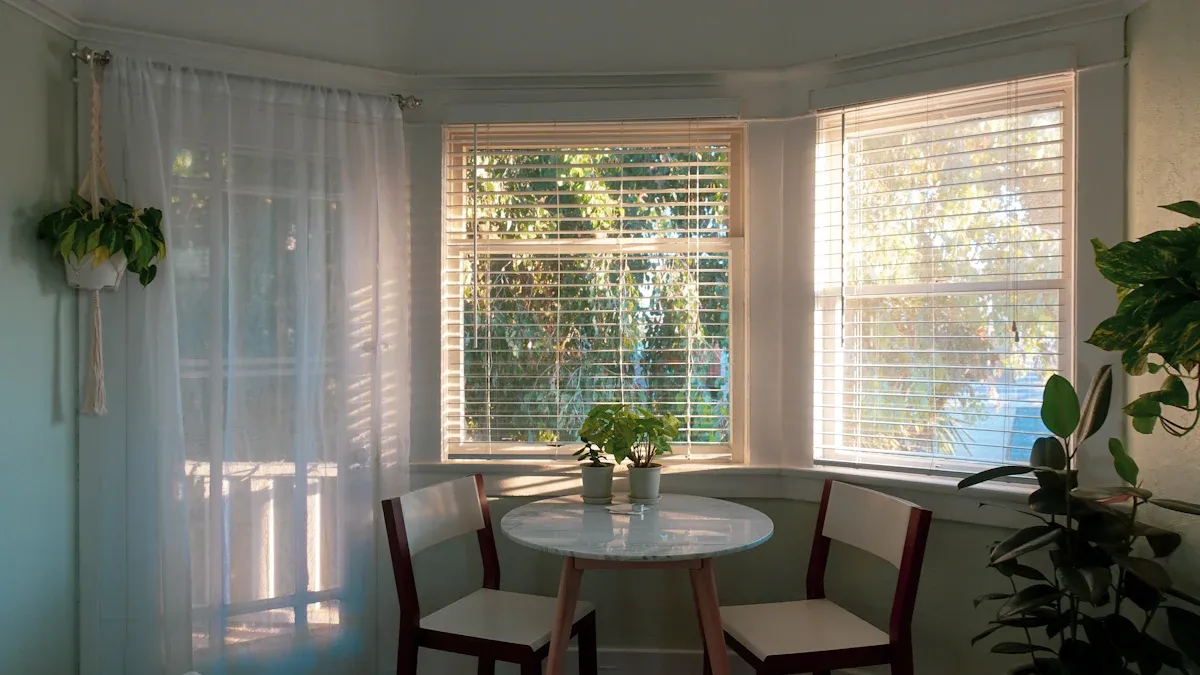
Window treatments fall into three main categories: hard window treatments, soft window treatments, and layered window treatments. Each type offers unique features for controlling light, privacy, and room decor.
| Category | Description |
|---|---|
| Hard window treatments | Made of hard materials like wood or vinyl, including shades, blinds, shutters |
| Soft window treatments | Composed of soft materials such as sheers, curtains, drapes, roman shades |
| Layered window treatments | A combination of both hard and soft window treatments |
Blinds: Hard Materials and Precise Control
Blinds are a popular choice among window treatments. They use hard materials such as wood, composites, or metals. Types of blinds include wood blinds, faux wood blinds, and aluminum blinds. These materials make blinds durable and easy to clean. Blinds have slats that tilt, allowing precise control over light and privacy. Users can adjust the slats to let in just the right amount of sunlight or block it out completely. This feature sets blinds apart from other window treatments.
Tip: Blinds with adjustable slats are ideal for rooms where you want to manage both privacy and natural light.
Shades: Soft Coverage and Versatility
Shades offer a softer look compared to blinds. They are made from fabrics that roll or fold up. Common materials include light-filtering fabrics and blackout options. Shades provide effective coverage and can darken a room when needed. Cellular shades and roller shades are known for their energy efficiency and insulation. The versatility of shades comes from the wide range of fabrics and styles available. Some shades help reduce noise and improve comfort in different climates.
- Shades are easy to operate and fit many window sizes.
- They work well in bedrooms, living rooms, and offices.
Curtains: Fabric Style and Easy Decor
Curtains are the most decorative of all window treatments. They use a variety of fabrics, from cotton and linen to silk and velvet. The types of curtains you choose can change the mood of a room. Lightweight fabrics like sheer or linen create an airy feel, while heavier fabrics such as velvet add warmth and luxury. Curtains hang from rods and are simple to install or change. They come in many colors, patterns, and textures, making them a flexible choice for any aesthetic.
Note: Curtains not only enhance the look of a room but also help with insulation and sound absorption.
Window Blind Curtain Comparison
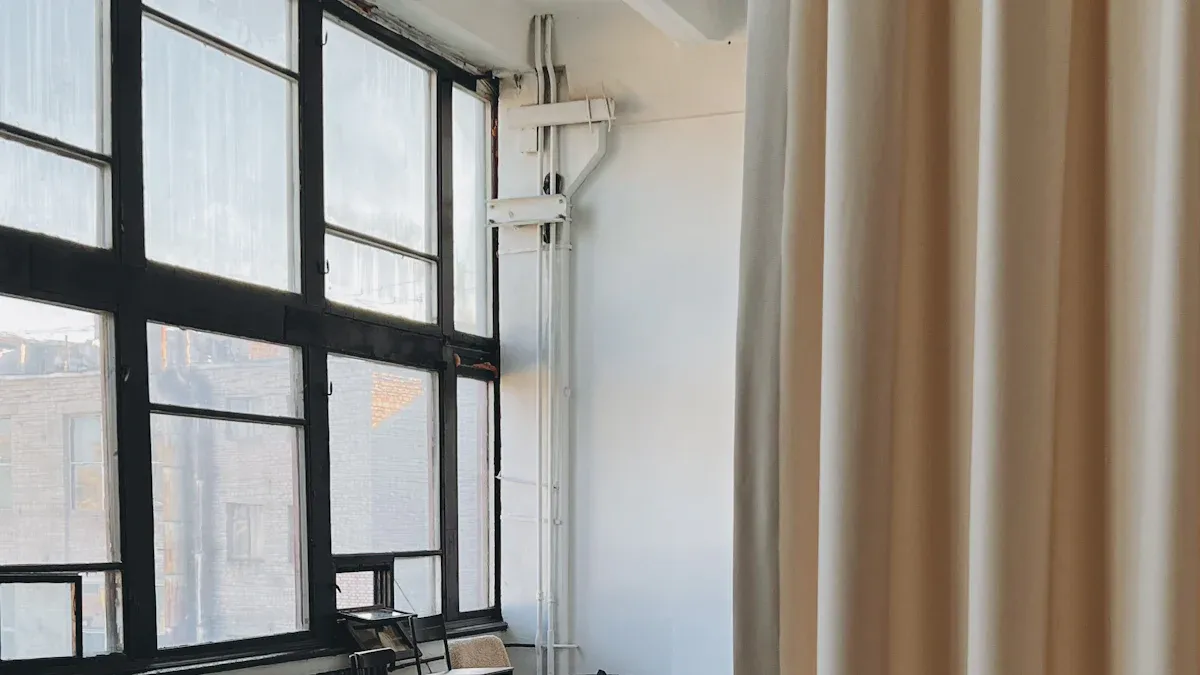
Light Control and Privacy
A window blind curtain offers unique advantages for light control and privacy. Blinds use adjustable slats, allowing users to fine-tune the amount of sunlight entering a room. Curtains, on the other hand, provide binary control; they are either open or closed. Shades, especially custom blinds and shades, can be raised or lowered for varying degrees of coverage. Blackout options are available for all three, but blackout curtains deliver complete darkness, fully protecting one’s privacy. Custom made window blinds are popular for their ability to block light while maintaining privacy control.
| Feature | Blinds | Curtains |
|---|---|---|
| Light Control | Adjustable slats for precise control of light | Binary control: open or closed |
| Types | Venetian, Vertical, Roller, Roman | Sheer, Blackout, Thermal, Decorative Drapes |
| Room-Darkening | Can allow light seepage through gaps | Blackout curtains provide complete darkness |
| Ambiance | Offers a modern look with functional benefits | Provides a softer, luxurious aesthetic |
Privacy levels depend on material and operation. Blinds and curtains made from blackout fabrics offer high privacy. Custom made window blinds with faux wood or vinyl slats are ideal for bedrooms and bathrooms. Shades with light-filtering fabrics balance privacy and natural light. The method of operation—tilting, pulling, or sliding—affects privacy control.
- Privacy levels among blinds, shades, and curtains vary based on light-filtering capabilities.
- Material choices (woven, vinyl, bamboo, faux wood, fabric) significantly impact privacy.
- The method of operation (how they open and close) also affects the overall privacy experience.
Style and Room Decor
Blinds and curtains play a major role in the light control and aesthetic of a room. Custom made window blinds, such as cellular shades and roller shades, are popular for modern home decor. Cellular shades offer energy efficiency and light filtering. Roller shades provide a streamlined look. Custom blinds and shades can be tailored to match any style, from minimalist to traditional.
Matchstick shades add texture and warmth. Top down bottom up shades allow for privacy and light control. Roman shades offer personalization with colors and patterns. Decorative sheer curtains enhance style without blocking light. Grommet curtain panels suit large windows, giving flexibility and a neat appearance. Blackout drapes lined with special material protect furniture from UV damage.
Window treatments can change the ambiance of a room. Heavy drapes create drama, while minimalist blinds enhance a modern look. Materials matter; heavier fabrics improve acoustics and intimacy. Vertical panels make rooms look taller. Lighter curtains make spaces feel open and airy.
Maintenance and Durability
Maintenance routines differ for blinds, shades, and curtains. Custom made window blinds require regular dusting with a feather duster or microfiber cloth. Curtains and fabric shades should be vacuumed every two weeks. Spot cleaning with mild detergent helps remove stains. Faux wood blinds can be cleaned with a damp cloth, while aluminum or vinyl blinds may be soaked in soapy water.
| Type of Window Treatment | Maintenance Routine |
|---|---|
| Fabric Curtains and Drapes | Wash or dry clean according to the care label. Use cool water to prevent shrinking. |
| Wood or Faux-Wood Blinds | Wipe with a damp cloth, then dry immediately. Avoid soaking wood to prevent warping. |
| Aluminum or Vinyl Blinds | Soak in mild soapy water, then rinse and dry. |
| Roller and Cellular Shades | Spot-clean with a gentle detergent. Avoid excess moisture. |
| Motorized and Smart Window Coverings | Dust control sensors and motor casings with a dry cloth. Test remotes and apps to ensure connection stability. |
- Vacuum curtains and drapes every two weeks to remove dust and allergens.
- Dust blinds weekly using a feather duster or microfiber cloth.
- For faux wood blinds, use a mild detergent solution to clean slats.
- Regularly check for frayed cords or uneven slats and tighten loose brackets.
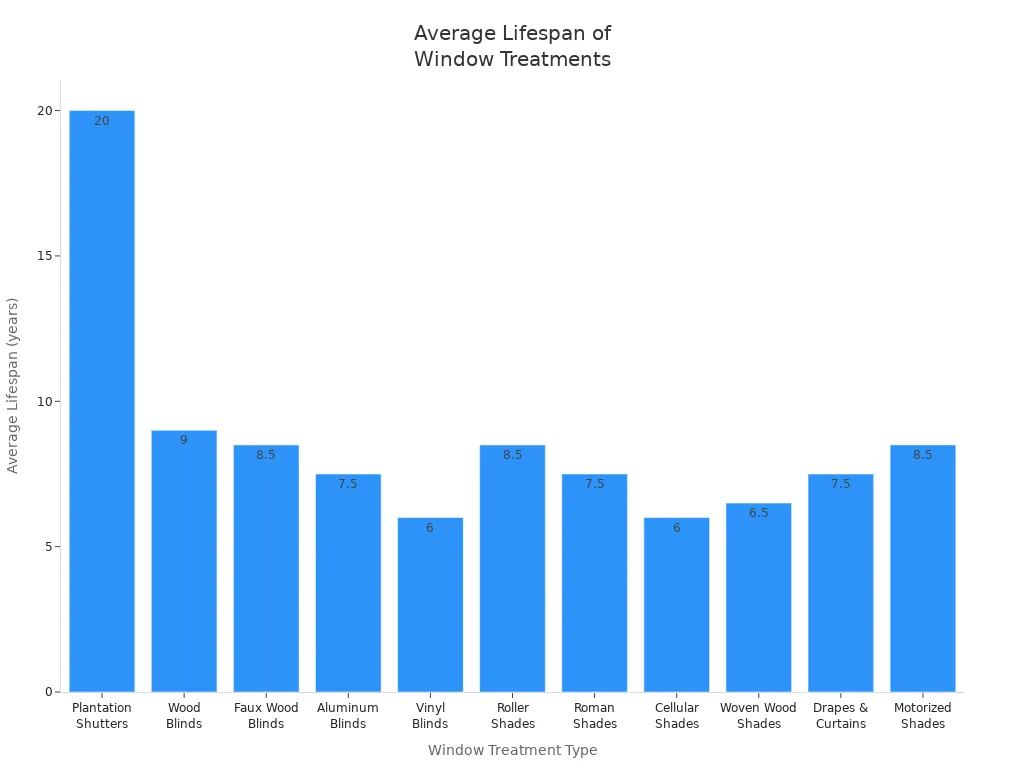
Durability depends on material and usage. Plantation shutters last 15–25 years, making them the most durable. Wood blinds last 8–10 years but may warp in humidity. Faux wood blinds are ideal for humid climates and last 7–10 years. Aluminum blinds can dent but last 7–8 years. Vinyl blinds have the shortest lifespan at 5–7 years. Roller shades and cellular shades last 5–10 years. Drapes and curtains last 5–10 years, with liners extending their life.
| Window Treatment | Average Lifespan | Notes |
|---|---|---|
| Plantation Shutters | 15–25 years+ | Most durable, adds home value |
| Wood Blinds | 8–10 years | Prone to warping in humidity |
| Faux Wood Blinds | 7–10 years | Great for humid climates |
| Aluminum Blinds | 7–8 years | Can dent easily |
| Vinyl Blinds | 5–7 years | Shortest lifespan |
| Roller Shades | 7–10 years | Simple and durable |
| Roman Shades | 6–9 years | Stylish but fabric weakens |
| Cellular Shades | 5–7 years | Energy efficient but delicate |
| Woven Wood Shades | 5–8 years | Natural look, humidity sensitive |
| Drapes & Curtains | 5–10 years | Fabric fades, liners extend life |
| Motorized Shades | 7–10 years (motor) | Fabric life depends on type |
- Material Quality: Premium materials last longer than cheaper options.
- Usage Frequency: Blinds in high-traffic areas wear out faster.
- Environmental Exposure: Sunlight and humidity can damage materials.
Cost and Value
The cost of a window blind curtain varies by material, style, and installation. The national average cost for new blinds, including installation, is between $700 to $800 for eight windows. Prices range from $300 to $1,100. Installation costs are usually $15 to $50 per window. Custom made window blinds and custom blinds and shades may cost more, but they offer better fit and functionality.
| Type | Cost Range | Durability | Functionality |
|---|---|---|---|
| Blinds | More than curtains, less than shutters | More durable than curtains | Better light control, easier to clean |
| Shades | Varies widely | Depends on material | Softens light, privacy options |
| Curtains | Generally cheaper | Less durable | Aesthetic appeal, less control over light |
Custom blinds and shades provide excellent value for money. Blinds are more durable than curtains and offer better light control. Curtains are generally cheaper but less durable. Blackout options are available for all three, with blackout curtains being the most effective for complete darkness.
Choosing the Right Window Treatment
Selecting the best window blind curtain depends on room type, climate, and personal style. Bedrooms benefit from blackout shades or blinds to ensure complete darkness. Living rooms need light-filtering options for privacy and natural light. Kitchens require vinyl or aluminum blinds and solar shades for easy cleaning and water resistance. Bathrooms need faux wood or vinyl blinds and fabric shades for moisture resistance and privacy.
| Room Type | Recommended Treatment | Key Considerations |
|---|---|---|
| Bedrooms | Blackout shades or blinds | Ensure complete darkness for sleeping. |
| Living Rooms | Light-filtering options | Allow natural light while maintaining privacy. |
| Kitchens | Vinyl or aluminum blinds, solar shades | Easy to clean, water-resistant, and warp-proof. |
| Bathrooms | Faux wood or vinyl blinds, fabric shades | Moisture-resistant and prioritize privacy. |
| Coastal Homes | Solar shades, honeycomb shades | UV protection, insulation, and withstand humidity and salt exposure. |
Climate and window orientation influence the choice. East-facing windows get morning sunlight, so light-filtering shades work well. West-facing windows need treatments that manage afternoon heat, such as automated shades. South-facing windows benefit from solar shades for heat control. North-facing windows can use insulating cellular shades to keep warmth in during colder months.
Energy efficiency is another factor. Insulated cellular shades have the highest R-value and provide excellent insulation. Window quilts block up to 80% of heat loss. Drapes and curtains reduce solar heat gain when drawn. Blinds offer variable insulation depending on material.
| Type of Window Covering | Energy Efficiency Rating | Insulation Effectiveness |
|---|---|---|
| Insulated Cellular Shades | Highest R-value (4-5) | Excellent insulation due to honeycomb structure |
| Window Quilts | High R-value | Blocks up to 80% heat loss, 86% heat gain |
| Drapes and Curtains | Moderate | Reduces solar heat gain when drawn |
| Blinds (Horizontal & Vertical) | Variable | Depends on material; allows for ventilation |
Ease of use and smart home compatibility are important for modern homes. Motorized blinds and shades can be controlled with a button, app, or voice command. They work with Alexa, Google Assistant, and Apple HomeKit. Custom made window blinds and custom blinds and shades are available with smart features for convenience.
| Feature | Motorized Blinds/Shades |
|---|---|
| Ease of Use | Convenient for hard-to-reach windows; controlled with a button. |
| Compatibility with Smart Home | Compatible with Alexa, Google Assistant, Apple HomeKit. Requires plug-in motor for integration. |
| Feature | RYSE SmartShade |
|---|---|
| Ease of Use | Can be controlled via buttons, app, or remote. |
| Compatibility with Smart Home | Works with Alexa, Apple HomeKit, Google Home for voice commands. |
| Feature | Beasen Blinds |
|---|---|
| Ease of Use | Integrated battery setup; easy to maintain. |
| Compatibility with Smart Home | Compatible with Amazon Alexa, Google Home, Apple HomeKit, Samsung SmartThings. |
When comparing features, consider light control, aesthetic appeal, customization, installation, and durability.
| Feature | Curtains | Blinds | Shutters |
|---|---|---|---|
| Light Control | High (with blackout) | Moderate to High | High |
| Aesthetic Appeal | Soft and Inviting | Elegant and Minimalist | Timeless and Sophisticated |
| Customization | Wide Range of Options | Various Patterns/Textures | Stylish and Classic |
| Installation | Easy to Moderate | Moderate | Moderate to Difficult |
| Factor | Shades | Blinds | Curtains |
|---|---|---|---|
| Cost | $$ | $ | $$$ |
| Light control | Must be fully raised or lowered. Excellent options for full light blockage. | Excellent and precise. Slats tilt to control light angle and privacy simultaneously. | Variable opacity (light filtering fabrics to opaque). Cannot be precisely adjusted for indirect light. |
| Energy efficiency | Superior insulation. Cellular (honeycomb) shades are industry leaders for energy savings. | Poor to moderate. Forms a barrier, but the slats allow air gaps. Exception: cellular/faux wood blinds | Good insulation if thermal-backed or heavier fabrics are used. |
| Aesthetics & design | Highly customizable with roman, roller and fabrics. Clean, modern look. | Minimalist, sleek, and less intrusive. Makes rooms appear larger. Limited pattern variety. | Highest design versatility. Can be customized with decorative cornice or grommet headers. |
| Installation | Professional installation recommended, especially for a precise inside mount fit. | DIY or professional install. Can be inside mount or outside mount. | Easier to hang curtains as an outside mount over the frame. |
| Durability (lifespan) | 5 to 10 years. Fabric is durable, but some cellular shades can be delicate. | Varies significantly. Vinyl/aluminum blinds can bend easily; wooden blinds are highly durable. | 3 to 7 years (depending on fabric quality). |
Custom made window blinds and custom blinds and shades offer the best combination of light control, privacy, and style. Blackout options are essential for bedrooms and media rooms. Blinds and curtains work well together for layered window treatments, providing flexibility and aesthetic appeal.
Tip: Always consider the room’s function, climate, and desired aesthetic appeal before choosing a window blind curtain. Custom made window blinds and custom blinds and shades can be tailored to meet specific needs, ensuring comfort and style for every space.
| Feature | Blinds | Shades | Curtains |
|---|---|---|---|
| Light Control | Precise | Full or none | Filter or block |
| Cost | Affordable | Varies | Can be costly |
| Maintenance | Easy | Moderate | Regular cleaning |
To find the best window treatment, assess privacy, light needs, and style. Think about how to choose materials that match your decor. The best window treatment fits your lifestyle. Always measure windows and consider how to choose options for each room.
FAQ
What is the main difference between blinds and shades?
Blinds use hard slats for precise light control. Shades use fabric panels that raise or lower for coverage. Both offer privacy and style options.
How do I clean curtains, blinds, and shades?
Tip: Vacuum curtains and shades regularly. Dust blinds with a microfiber cloth. Wash curtains as directed on the care label for best results.
Which window treatment is best for energy efficiency?
| Window Treatment | Energy Efficiency |
|---|---|
| Cellular Shades | Excellent |
| Thermal Curtains | Good |
| Faux Wood Blinds | Moderate |
Cellular shades provide the highest insulation. Thermal curtains also help reduce heat loss.